

The Primorsky Aquarium is very much a vast living organism, constantly evolving. Nearly every day brings something new, sometimes small changes and sometimes dramatic refurbishments affecting the species on display, the design and interpretive graphics of the exhibits. Visual upgrade may be achieved simply by spreading white sand on a tank floor or introducing a shimmering swarm of mysid shrimp darting among older residents. But other times, the entire logic of an exhibit must be rethought.
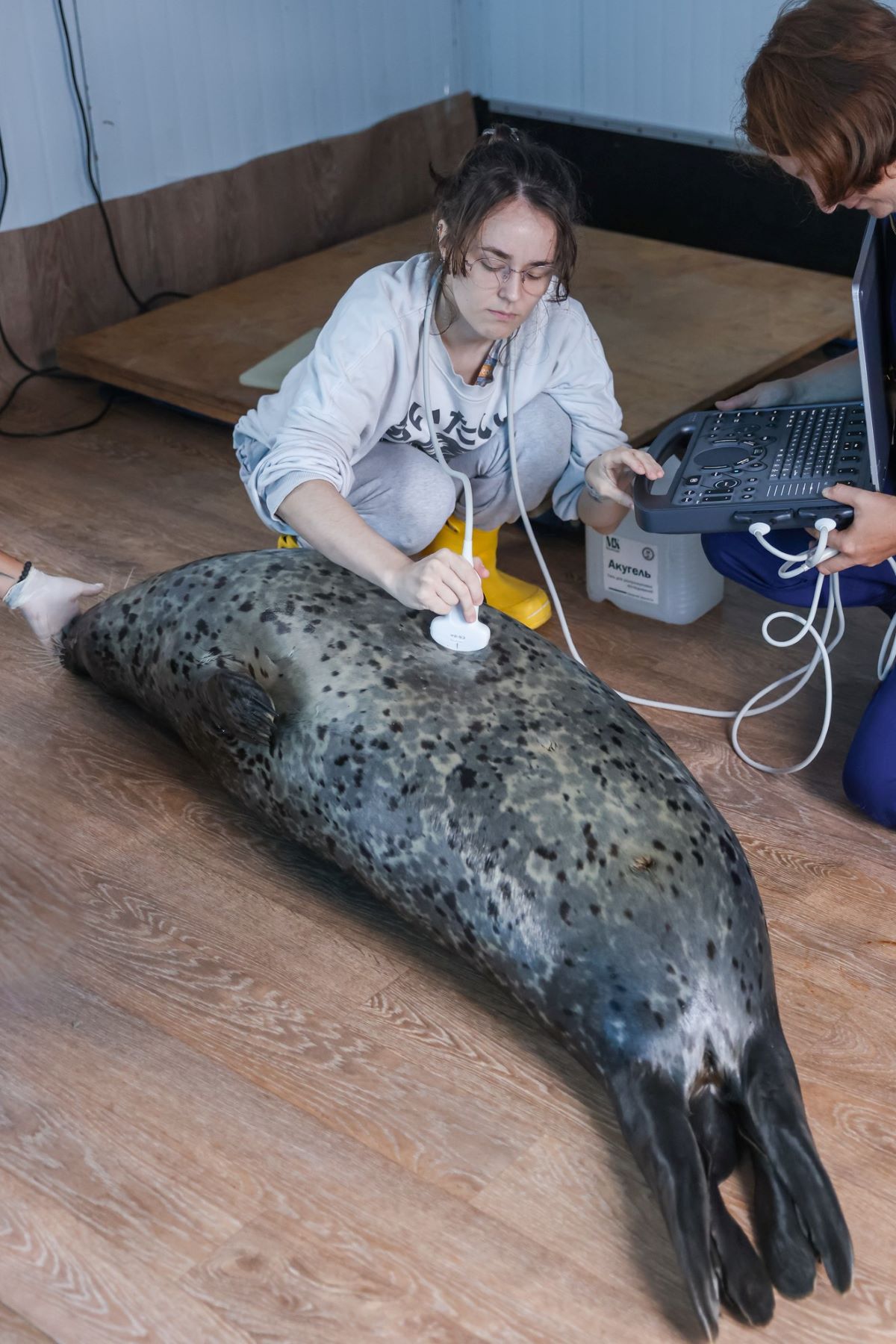
“There’s one goal behind all these updates,” says Olga Shevchenko, Director of the Primorsky Aquarium. “We need to make our Aquarium more attractive to visitors and more comfortable for all its inhabitants. Right now, our specialists are working hard to improve our wayfinding system so guests could navigate through the exhibits without confusion. We are also refining the layout and the species composition in our tanks, as well as enriching the stories we tell in our graphics. We want people to truly connect with our animals—to know their personalities, their birthdays, what they love to eat, and the extraordinary work it takes to care for them.”

Both planned overhauls and sudden bold ideas are discussed during the director's regular walkthroughs. Heads of departments and divisions share their plans. Andrei Telegin, Chief of Collections Management, dreams of installing a tank in the Evolution of Life in the Ocean exhibit, featuring lampreys and hagfish—ancient vertebrates with a history stretching back some 500 million years. Anna Kozmina, Head of the Department of Russian Far East Freshwater Species, wants to remove rocks from a cylindrical tank with kaluga sturgeon and replace them with a sandy bottom, arranging a more comfortable habitat for her charges. Artem Suiundukov, Head of the Department of Exotic Aquatic Species, is going to transform one of the first aquariums of the exhibition route into a celebration of echinoderms, one of the animal groups that marked the very beginning of life on Earth.
But what exactly awaits visitors in the near future? Victoria Dianova, Head of the Department of Russian Far East Marine Species, shares some details. “Very few aquariums in the world can showcase the biodiversity of the Far Eastern seas,” she says. “Some species are displayed only at our institution, including Pacific herring, Japanese pilchard, and snailfish of the genus Careproctus. Walleye pollock is another rarity on display. Right now, we are entering our busiest time of year: fish larvae are hatching, and we are to start feeding them, which is painstaking work as the babies of each species need their own type of food. Some eat pelagic prey while others pick food from the bottom. Water temperature, salinity, and many other factors matter, too. We’re going to slightly modify the warm-water species section. In addition to mackerel, we’ll introduce Japanese pilchard and anchovy and we plan to acclimate halfbeak and needlefish. They are rather delicate and finicky fish, but we’re willing to take a risk. Another interesting newcomer from southern waters is the sargassumfish Histrio histrio. A subtropical species, it occasionally ventures into the southern part of Peter the Great Bay. This odd-looking anglerfish is challenging to keep though it is a truly amazing creature. Beyond the ‘fishing rod’ on the head with a bait to lure prey, it has specialized pectoral fins used like a pair of arms helping it to crawl through the seaweeds. We expect this remarkable fish to arrive by June.”
The list of upcoming changes and updates for the Department of Russian Far East Marine Species alone is substantial. The deepening partnership with the Russian Crab Group of Companies promises new crab species of various colors and sizes in the Bering Sea and Sea of Okhotsk exhibit. The rock opposite the kelp forest tank will soon host a lively information bulletin featuring fun facts about marine life—the first edition is due by early May. And much, much more.

Other biological departments are keeping pace. The Primorsky Aquarium is constantly changing and growing alongside its many inhabitants. For ten years now, its exceptional team has been dedicated to ensuring that visitors could witness the astonishing diversity of the oceans and unfold sea wonders at every turn of their tour of the Aquarium.